Perineal Pressure and Numbness

Numbness during a ride is not something to ride through.

Perineal pressure and genital numbness are signs of soft tissue compression and nerve impingement — not a conditioning issue. Left unaddressed, recurring compression can have lasting consequences. The right saddle geometry resolves it with Zeta's Reactive Padding.

Backed by a 30-Day-Money-Back Guarantee: ride it, then decide.

Clinical note: Persistent genital numbness during or after cycling has been associated in peer-reviewed literature with pudendal nerve irritation and vascular compression. This is not normal discomfort — it is a mechanical problem with a mechanical solution.

Recognize Your Symptoms

Perineal pressure symptoms exist on a spectrum. Many cyclists normalize them — attributing numbness to "being out of shape" or soreness to "needing more time in the saddle." Neither is accurate. These are compression signals.

Soft tissue pressure

Noticeable pressure or aching in the perineal region, even on short rides. Worsens with duration or aggressive forward lean.

Numbness or tingling

Partial or complete loss of sensation in the genitals or inner thighs during or after a ride. Often begins subtly, then progresses.

↑ Do not ignore. This is nerve or vascular compression.

Delayed recovery

Sensation returns slowly after dismounting — 5, 10, even 30 minutes. Each ride the recovery takes longer.

Off-bike symptoms

Discomfort, sensitivity, or altered sensation persisting hours after a ride. A sign that tissue is not recovering between sessions.

↑ Seek assessment if symptoms persist off the bike.

  • Occasional Pressure

    Noticeable only on rides over 45 minutes. No numbness. Uncomfortable but manageable.

  • Numbness Sets In

    Tingling or partial numbness within 20–30 minutes. Sensation returns after dismounting, but the pattern is worsening.

  • Persistent Off-bike

    Numbness lingers post-ride. Affecting confidence, performance, and willingness to ride. Medical review recommended alongside saddle change.

What Is Actually Happening

Most cycling saddles concentrate load along a central ridge that runs directly over the perineum — the soft tissue region containing the pudendal nerve and the perineal artery. Sustained pressure on this zone compresses both vascular and neural structures. The result is ischemia (restricted blood flow) and nerve impingement — expressed as numbness, tingling, or pain.

The compression sequence: what happens with a standard saddle

  1. Saddle nose or central ridge contacts the perineum. Forward-lean riding posture increases contact pressure in the perineal zone.
  2. Perineal artery compression reduces blood flow. Sustained compression (as little as 11 mmHg) restricts arterial flow to the genitals.
  3. Pudendal nerve impingement begins. The pudendal nerve, which controls sensation in the perineal region, is compressed against the saddle surface.
  4. Numbness sets in. Combined ischemia and nerve compression produce the characteristic loss of sensation cyclists experience mid-ride.
  5. Repeated exposure compounds risk. Each ride without saddle correction extends cumulative compression time on already-stressed tissue.

The Engineering Response

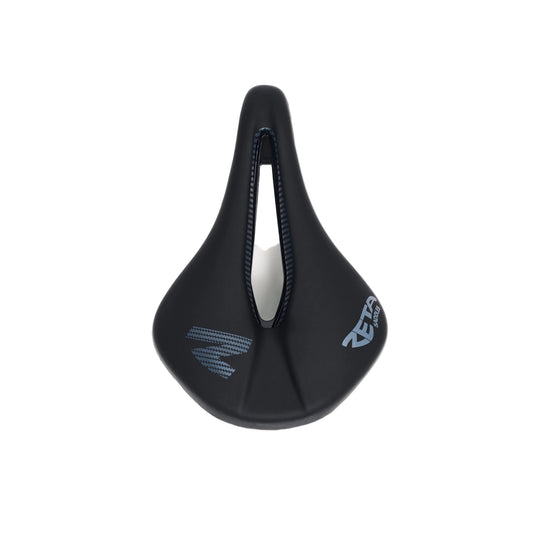
The Zeta Saddle was designed specifically to eliminate perineal contact pressure. Dr. O'Shea's clinical background in musculoskeletal injury informed an architecture where load is evenly transferred entirely from the sensitive ischial tuberosities.

Reactive Padding prevents the sit bones from bottoming out vs foam with compression set/failure to support/rider bottoms out, increased hard contact zones.

By being supported and not sinking in too deep this keeps the sit bones and pubic rami supported, comfortable, and perineum staying above contact zones.

Full-relief central channel. No central contact

The Zeta channel is not a cosmetic groove. It is a structural void engineered to maintain complete clearance from the perineal zone under real rider load — confirmed by third-party pressure mapping.

Load transferred to ischial platform

Rider weight is redirected entirely onto the sit bone platform — the bony prominences evolved to bear seated load. Perineal tissue is never asked to share that load.

Nose geometry designed for forward-lean positions

Road and gravel riders in aggressive forward positions are highest risk for perineal pressure. The Zeta nose profile maintains clearance even at low handlebar height.

Validated. Zero perineal contact in pressure testing

gebioMized saddle pressure mapping on real cyclists showed zero contact pressure in the perineal zone on the Zeta Saddle — ranked first among 16 saddles tested.

Dr. Patrick O'Shea, DC

Founder, Zeta Saddles — Sports Chiropractor & Cyclist

"Perineal numbness is one of the most underreported cycling injuries I see in practice. Cyclists assume it's normal, or that they need to build tolerance. Neither is true. It's a saddle geometry problem — and it has a direct solution."